Substance or rule
Prohibited cosmetic ingredients in India: how the list works
Last checked 10 October 2026
India has no stand-alone 'banned ingredients' notification; Rule 39(2) of the Cosmetics Rules 2020 prohibits the raw materials in Annex A of IS 4707 Part 2 (about 1,614 substances in the 2025 edition), Annex B limits about 313 more, and the Rules themselves cap mercury (1 ppm), lead and arsenic in colours (20 and 2 ppm) and ban hexachlorophene and lead or arsenic compounds as colourants.
- Classification
- Prohibited (the Cosmetics Rules, 2020 under the Drugs and Cosmetics Act, 1940)
- Decided by
- Ministry of Health and Family Welfare; Bureau of Indian Standards
- Reference
- Rule 39, Cosmetics Rules 2020; IS 4707 Part 1 (colourants) and Part 2 (prohibited and restricted substances), 2025 edition
- Latest action
- 1 January 2025
- Last checked
- 10 October 2026
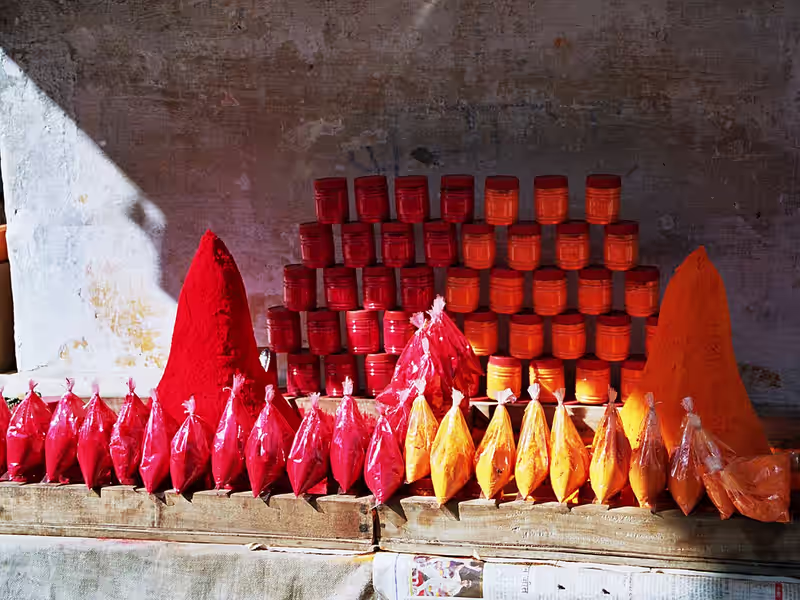
Photo: Shop selling Sindoor (Vermilion) in Pushkar, Rajasthan.jpg by https://www.flickr.com/photos/princessparkle/ (CC BY 2.0). All photo credits.
Cosmetics Rules, 2020, full text (Ministry of Health and Family Welfare)
Scope. A record here does not by itself mean a product or company is unsafe or banned today. Regulatory actions can apply to one batch, one formulation, one period or one state. Always check the linked government document for the current position, and tell us if something is out of date. How we label records.
Below: Blacklisted's explanationWe organise and explain what the document says. The document above is the authority.
Key facts
- Prohibited
- Annex A of IS 4707 Part 2: about 1,614 substances (2025 edition), broadly aligned with the EU's Annex II; includes m-phenylenediamine, most mercury compounds, hydroquinone, corticosteroids, antibiotics
- Restricted
- Annex B: about 313 substances allowed within limits, such as PPD in hair dyes, formaldehyde, some preservatives
- Colours
- Only the colourants in IS 4707 Part 1 (154) and the Tenth Schedule; lead not more than 20 ppm and arsenic not more than 2 ppm in any colour
- Named in the Rules
- Mercury (Rule 39(5)), hexachlorophene (39(4)), lead and arsenic compounds as colourants (39(6))
- Where to read it
- The BIS standard is sold, not free; CDSCO's 18 May 2026 notice confirms BIS publishes the list
People searching for a 'banned cosmetics list' usually find consultancy pages listing ingredients, because that is how Indian law is written. The Cosmetics Rules 2020 do not contain a schedule of banned substances. Rule 39(2) says that the raw materials listed in Annex A of IS 4707 Part 2 shall not be used, and Rule 39(3) confines colourants to those in IS 4707 Part 1 and the Tenth Schedule. The Bureau of Indian Standards maintains those annexes; the 2025 edition of Part 2 lists about 1,614 prohibited substances in Annex A and about 313 restricted ones with limits in Annex B, in line with the European Union's lists.
A handful of substances are named in the Rules themselves. Mercury is limited to a 1 ppm trace outside eye-area products (Rule 39(5)). Hexachlorophene is banned except in soap (39(4)). Lead and arsenic compounds may not be used as colourants (39(6)), and any permitted colour must contain no more than 20 ppm lead and 2 ppm arsenic. Those are the limits the state labs test against when they report a failure.
Two practical points. First, the standard is sold by BIS rather than published free, so consumers rely on summaries; CDSCO's own notice of 18 May 2026 confirms that 'the list of GNRAS and restricted ingredients is published by BIS'. Second, substances such as hydroquinone, tretinoin and corticosteroids are prohibited in cosmetics but licensed as prescription drugs, so a product containing them is a drug and must be judged under drug law.
What this means for you
The list is Indian law by reference
A manufacturer does not need a separate notification for each substance. If it is in Annex A, Rule 39(2) prohibits it.
Drugs are a separate question
Hydroquinone, tretinoin and steroids are prohibited in cosmetics and permitted as prescription drugs. A product that contains them is a drug and needs a drug licence.
Checking a label
Indian labels list ingredients by INCI name. The restricted substances that matter most for consumers are PPD (hair dye only, capped), formaldehyde releasers and the mercury trace limit.
This is a record of official orders, not medical advice. Do not stop a prescribed medicine without asking your doctor or pharmacist.
Common questions
Is there an official list of banned cosmetics in India?
Of ingredients, yes: IS 4707 Part 2, Annex A, adopted by Rule 39. Of products, no; product actions are alerts, cancellations and lab findings, which this site's dated list gathers.
Official sources and primary records
- Cosmetics Rules, 2020, full text (Ministry of Health and Family Welfare)GazetteMinistry of Health and Family Welfare · 15 December 2020
- India's cosmetic ingredient regulations: IS 4707 Part 1 (permitted colourants) and Part 2 (prohibited and restricted substances)SourceChemLinked · 1 January 2026
- CDSCO public notice: injectables are not cosmetics; no cosmetic is permitted to be used as an injection (File COS-1211/2026)RegulatorCDSCO · 18 May 2026